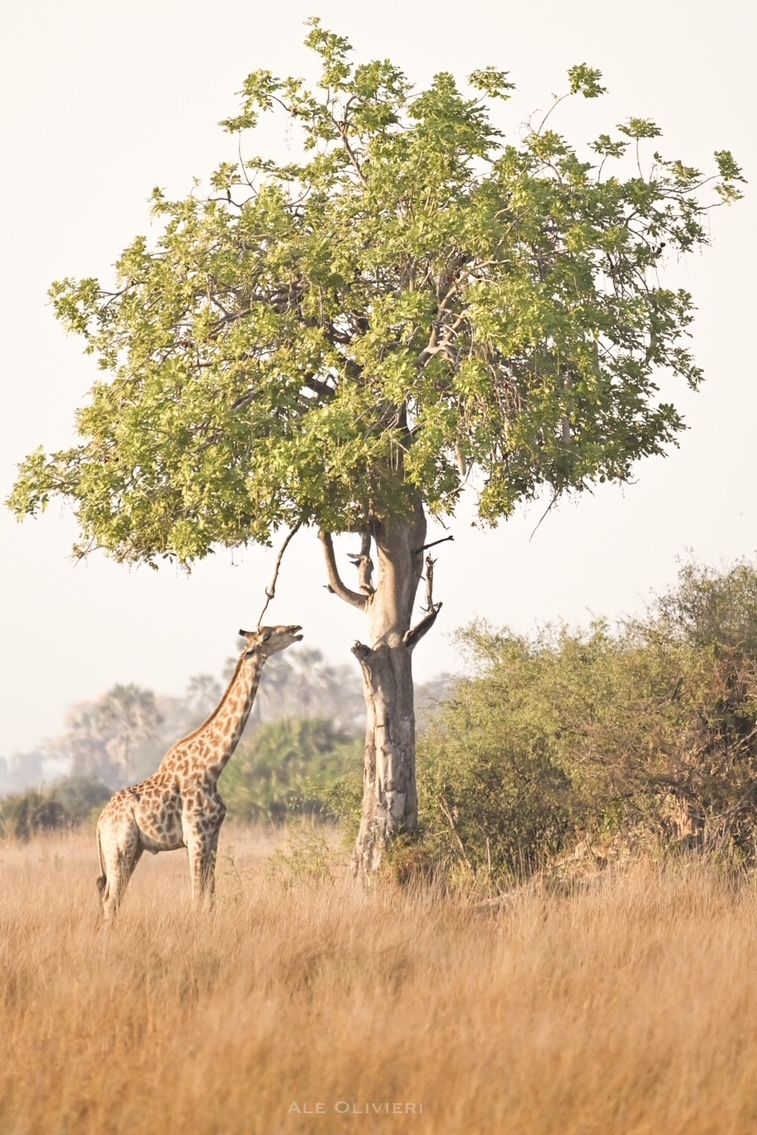
The Sausage Tree is a well known tree to anyone that knows a bit about the African bush. Even people that are not interested in trees cannot mistake this large tree. With sausage shaped pods growing large, it looks like someone has hung up pieces of salami to cure and dry. The tree is also known as a cucumber tree, but this is not a name that you will come across very often. These large fruits can weigh up to 12 kilograms (25 pounds) and have been known to fall and do some damage to people, much like coconuts in other areas.
In Mozambique the local people call the tree, ‘kigeli-keia’, and this is where the botanical name, Kigelia, comes from. In the Kruger area, the local people call in Tshokwane. This is a famous picnic spot in the National Park where there are numerous sausage trees growing.
The Tree
These large trees grow in bushveld and open woodland areas. They also enjoy the alluvial soils along flood plains and rivers. The tree may grow slowly at first, but as soon as the roots reach water, the tree speeds up and grows quite quickly in comparison to some of the other large trees.
The tree usually has one large trunk, occasionally folding towards the top where the dome-shaped canopy starts. The canopy itself can be incredibly dense and in some areas leopards have learnt to conceal themselves in here. Not only do they use it for shade, but they may drop on unsuspecting animals that come to feed on the flowers that have dropped. Branches usually start low down and it makes for a great climbing tree for us as well. Large individuals can reach up to about 25 metres (80 feet) in height.
Leaves and bark
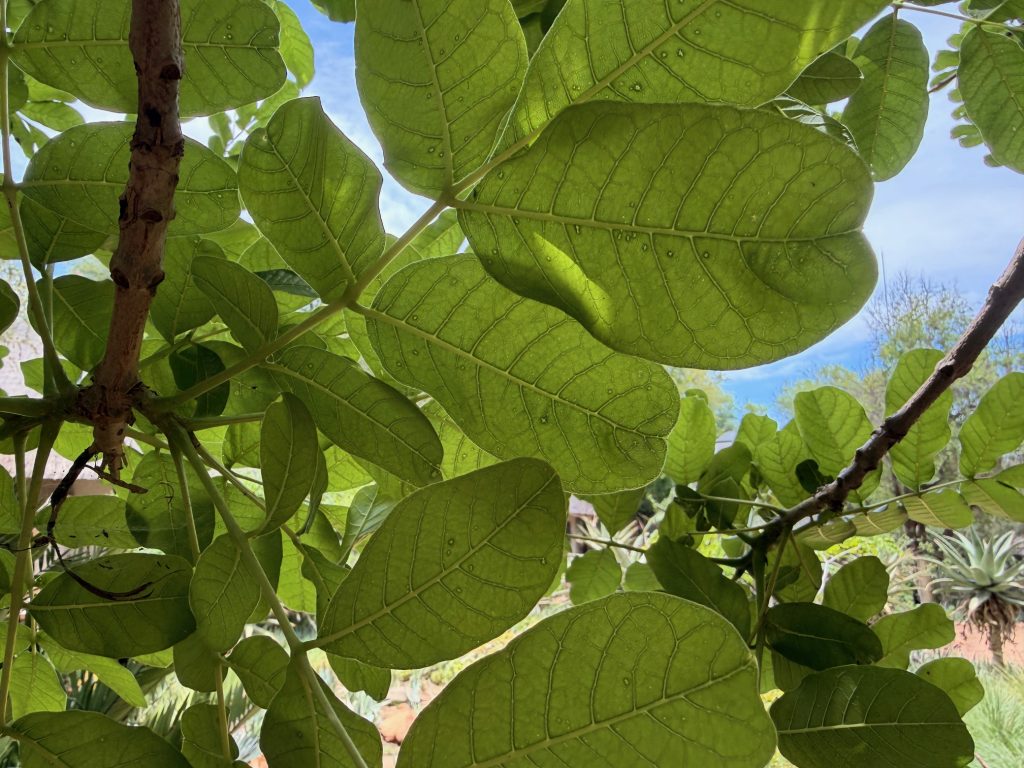
The leaves of the tree are large compound leaves, with a few pairs of leaflets on either side (usually between two and five), with a single one at the tip. When the leaves first make an appearance in spring, they are bight green in colour. As the season wares on though, they change to a darker green and can be quite tough and almost leathery in texture. The leaflets are usually smooth, but occasionally they can be wavy, with the single leaf at the tip being more often wavy, rather than the side leaves. The leaves are clustered towards the end of the branches rather than all over. The tree does drop its leaves, but only late on in winter rather than in autumn and regains its foliage fairly quickly after this.
The bark on the tree may remind some people of the of a Marula tree, being a light brown to grey in colour . The bark is however a lot smoother and in some parts of older trees, it does peel. The trunk of older trees can also become quite crooked as they age.
Fruit and flowers
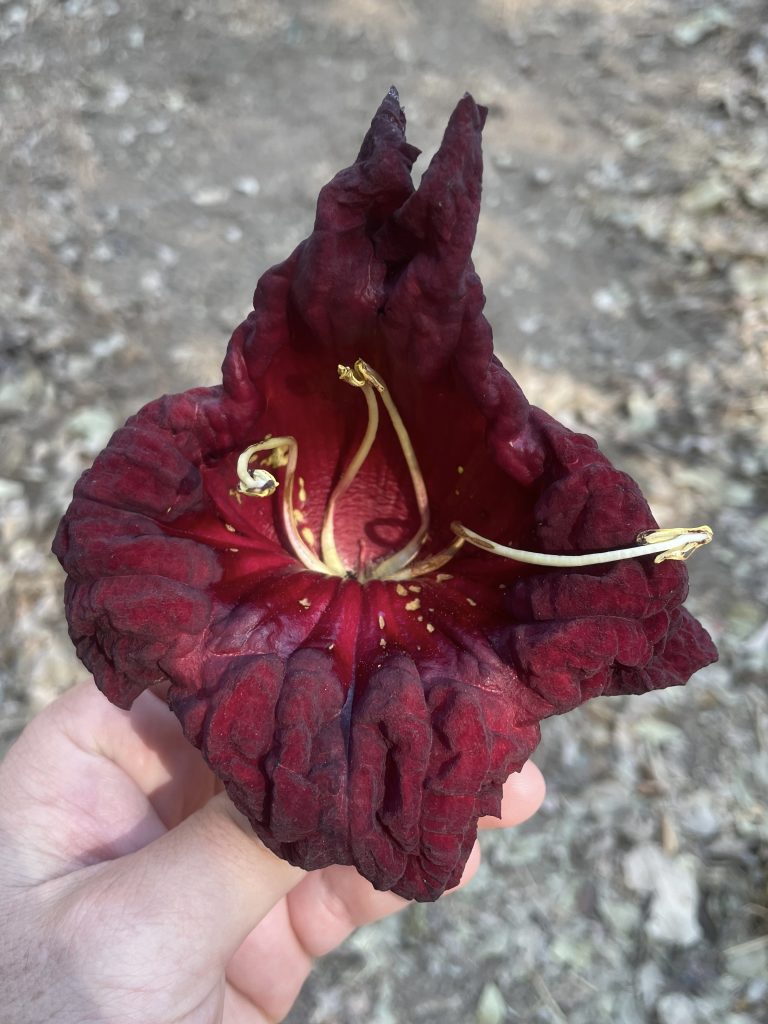
The flowers obviously come before the large pods that form. The flowers themselves are beautiful and come out in a deep scarlet colour. They are marked with attractive yellow lines that run the length of the petals. Although the flower is pretty, they do not have the best odour to them. They are large though and can easily be as big as the average adult man’s cupped hand. The flowers grow along a long stalk, with more than one bud being found on a stalk. They come out just before the fresh leaves sprout and can be found on the tree for a month or two. Animals love feeding on the flowers themselves and the of course the nectar. Trees can be alive with all sorts of life when they are in flower, with birds insects and monkeys feeding in the tree. Antelope like duiker, bushbuck and impala will often check around the bottom of the tree for fallen or dropped flowers as well.
Hanging on the same stalks that the flowers were once on, the fruits grow larger and are very solid. The sausages stay then stay on the tree for almost a full year before they are at full size and then fall off. People often assume that the pods would make good food for animals, but that is not the case at all. Most animals actually stay well away from the pods. In some cases giraffe will feed on them and the odd baboon may take a bite out of one now and then. For some reason though, two large grazers, the white rhino and hippo do like them. This is odd for them as their stomachs are adapted for digesting grasses but for some reason, they enjoy these large sausages. We do not eat them at all, but cutting one open, it does look like a cucumber inside, just a lot harder though.
Uses for the tree
The tree itself has got many uses and an ecological roles. The local people will use a mixture of the bark and roots are used to treat colds and even pneumonia. The bark on its own can be used to treat wounds and even toothache. People in villages will hang pods up in their houses and it is thought to deter large storms and winds from destroying their huts. The pods are also used to help with skin ulcers and more recently it has been found that they have extracts similar to that of aloe vera. Some of the local people believe that the pods can help men with genitalia enlargement, but there is not proof to it helping. When babies in some cultures are born, they are rubbed down with the powder of dried pods, it is thought to promote good health in the baby.
When it comes to animals, the leaves are browsed by elephants and any of the other browsers that can reach the leaves. As mentioned the flowers are eaten by many animals. Along with birds and insects visiting the flowers for nectar, fruit bats will do the same under the cover of darkness. As the foliage is so dense, it creates a perfect spot for animals to rest, as long as they are aware and alert to falling sausages!
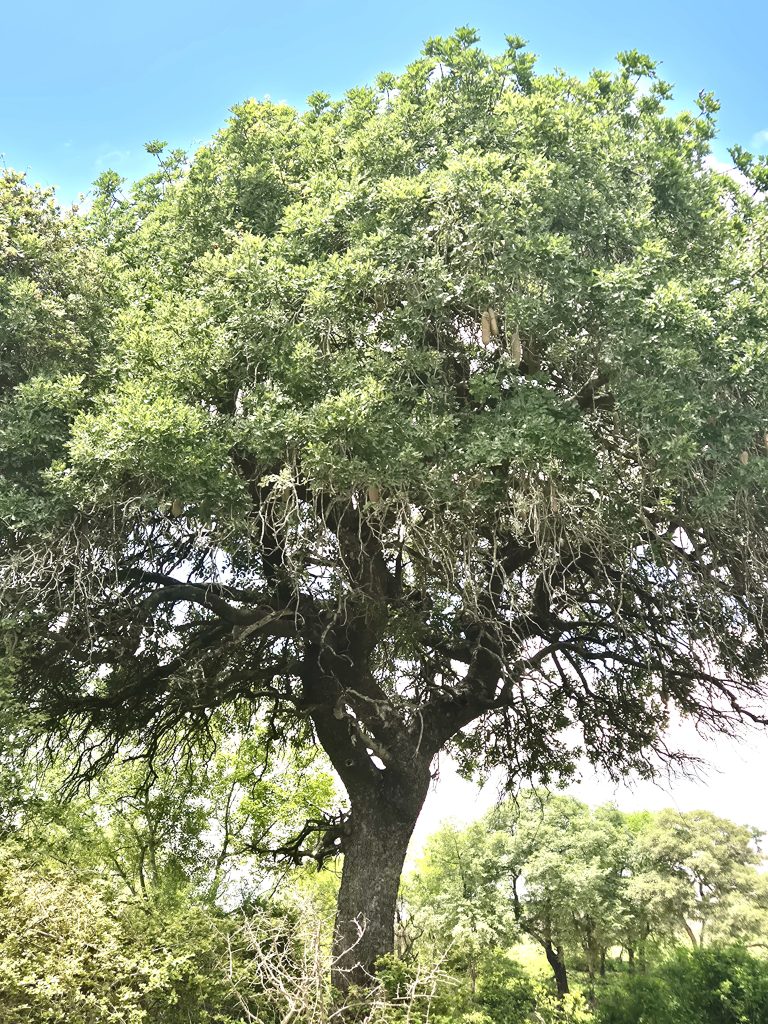
Next time you’re on safari, keep an eye out for these magnificent, large trees. They often grow really well in the lodges as well. If you struggle to find one, ask your guide to point them out as they with all the life in and around them, they are awesome to observe for some time.