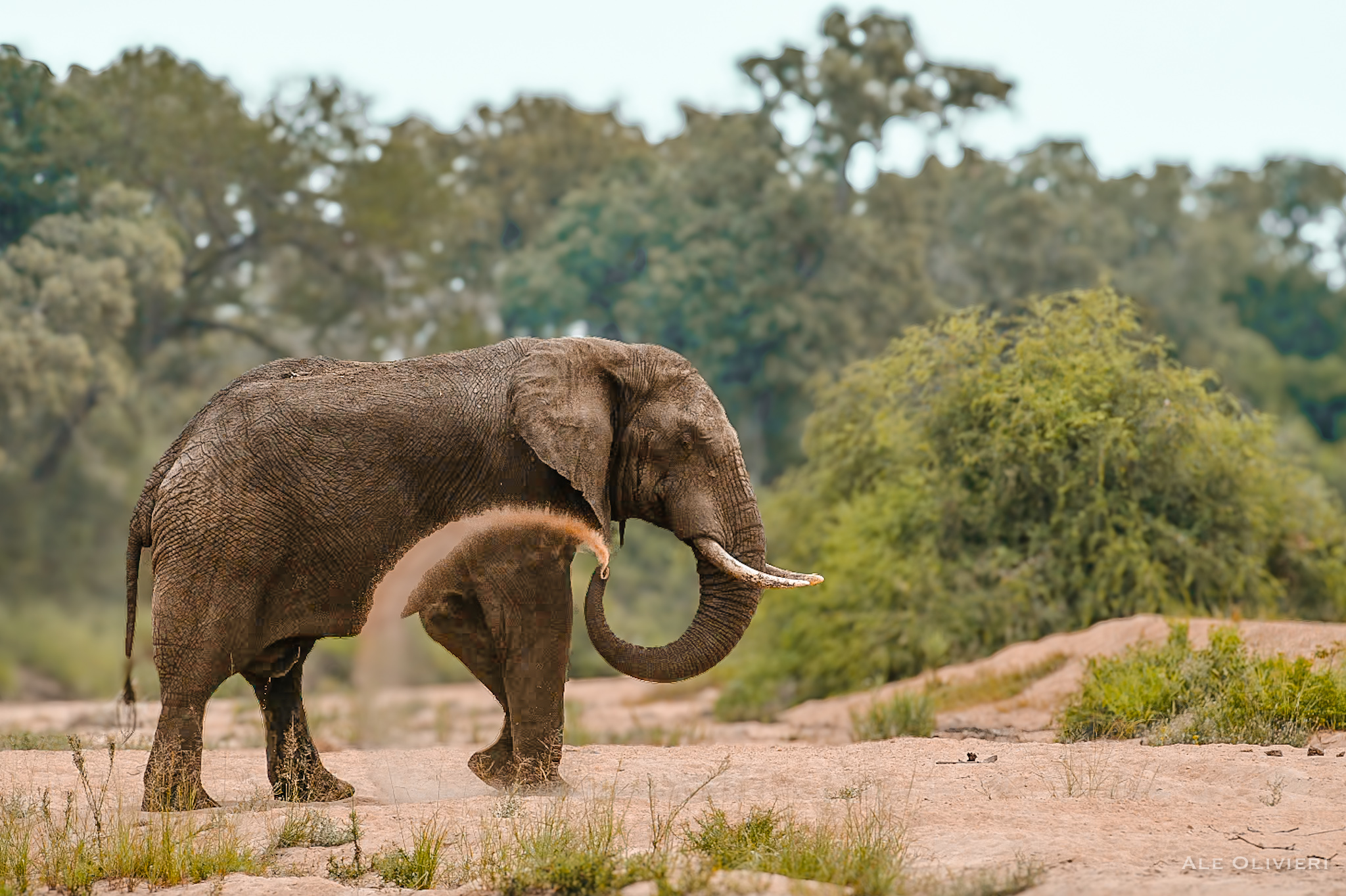
For decades, an elephants trunk puzzled us and was massively misunderstood. With a lot of time and research we have managed to understand this incredible appendage much better, and what an incredible appendage it is. From drinking, to breathing and feeding themselves, elephants are able to do more with their trunks than we are able to do with our hands! In this blog we are going to have a look at this specialized ‘nose’ and see how it works and helps these large grey pachyderms.
Elephants belong to the order proboscidea, which describes the how the trunk is formed, by the fusion of the nose and the upper lip. The trunk is said to be made up of thousands of muscles, but is in fact made of individual muscle fascicles that form bands running parallel to one another. These are found running from the base to the tip of the trunk. These other muscles are unique to elephants and they are called helical bands which spiral from top to bottom of the trunk. It is these muscles that allow the elephant to twist the trunk from side to side.
Left or right handed
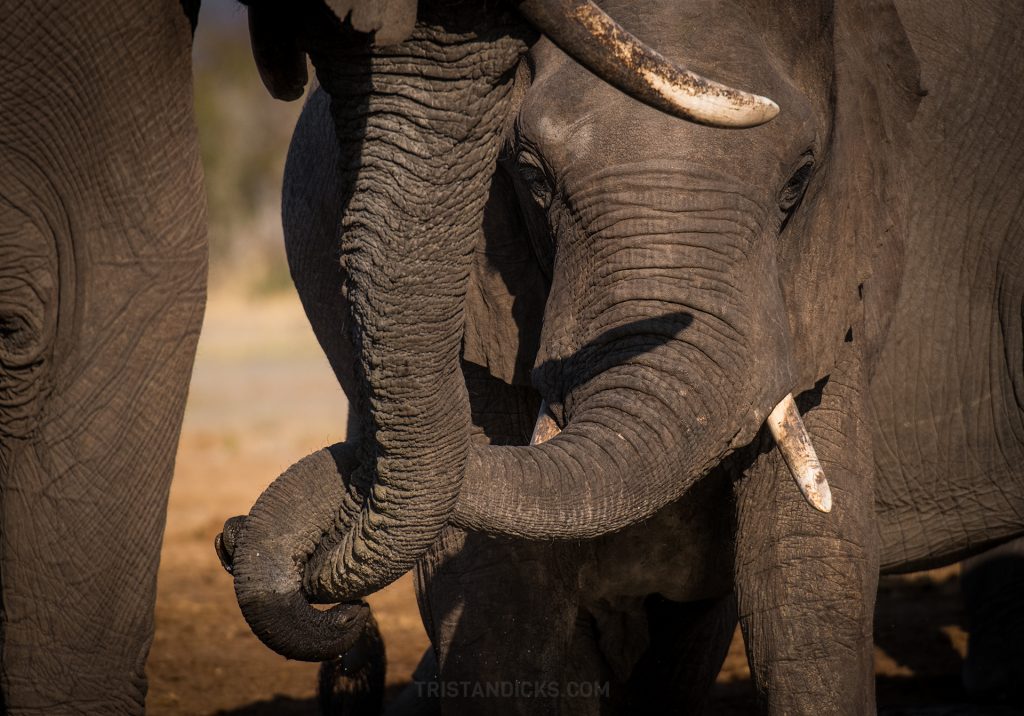
Often people will tell you that you can see whether an elephant is left or right ‘handed’ by the tusks. The tusks that is warn down more, chipped or broken, or contains a grass ring (small indentation on the tip of the tusk from continual usage) is the preferred side. This is true to a point, but things do happen to tusks and so it is not the most accurate way of determining this. The best way to see it, is actually to look at the base of the trunk. The reason for this, is when elephants are feeding, they grab and twist vegetation in the same, preferred direction. Over time this means that the muscles on one side can become stronger and so bulge out a little more, showing which side the individual elephant prefers.
Make up
The trunk itself is heavy and incredibly strong, but at the same time, it is also very sensitive. The tip of the trunk where the two little prehensile fingers are found (Asiatic elephants only have one), is the most sensitive part. These two fingers are much like our hands and are used to pick up individual marula fruits or even pull spikes and thorns out of their feet. Along the length of the trunk, there are also thick sensory hairs that sensitive to touch, much like whiskers on a cat.
As with all mammals, there are two nostrils that run the length of the nose or trunk. These two nostrils are separated by a muscular septum that is lined with mucous. The nostrils themselves are always moist and you may sometimes see the fluid dripping from the tip of the trunk. This liquid is there to help keep the nostrils free of dust that elephants breathe in, in their often hot, dry environments. Having a look at the skull of an elephant, you may notice the roughened bone on the front of the skull. This is where the broad base of the trunk is attached to the skull. When watching elephants vocalizing with deep grumbles, this is the area that you will see moving and vibrating.
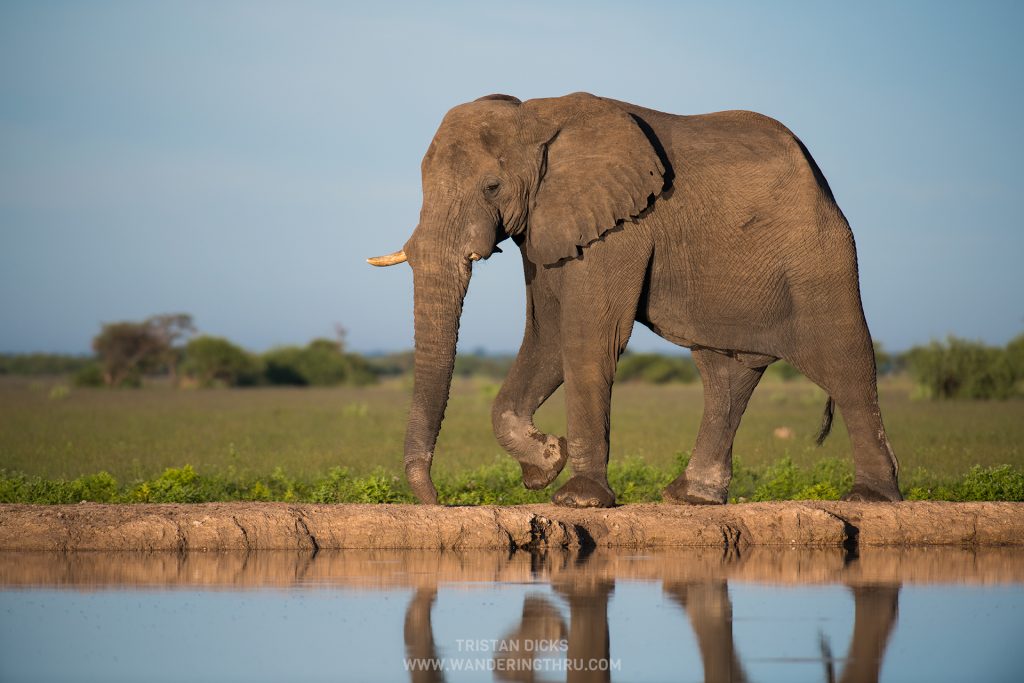
Bulls seem to have a lot longer trunks than what cows do. They also seem to have the ability to stretch their trunks out a lot longer than the females. This can be seen when they rest their trunks on the ground. A large bull can have a very heavy trunk and they are often rested on one of the tusks. This can be observed more often when a bull is in musth, covering large distances daily and so the heavy trunk can become a big burden to carry constantly.
Smelling around
Just by looking at the elephant and seeing the trunk, you can already see that they have a good sense of smell. Research has shown that it is better than that of blood hounds. With little sensory cells running the length of the entire nasal passages, there are so many receptors to pick up the different scents. The elephants will often lift the trunk up into the air to pick up scents. They will sometimes take a scent into the trunk, then blow the air into their mouth to use the organ of Jacobson to test a scent, especially bulls testing female reproductive status.
Drinking and other uses
The trunk is also used for drinking. They do not drink through the trunk itself, as they would drown, much like we would do if we tried to sniff water up through our noses. Rather suck water up into the trunk and then spray it into the mouth. A large bull can take up to 14 liters of water into the trunk at a time. They also use their trunks like a hose pipe and spray water all over the body to help with cooling themselves down. When it comes to drinking, elephants are fussy and prefer cleaner cooler water. When they suck water up, they will suck from right at the surface, where there is cleaner water with less sediment. The first few slurps are often sprayed to the side anyway and only once they get to the good water, will they drink. This is why elephants will dig pits on the inflows of dams where there is existing water. They will rather allow the water to filter through the sand.
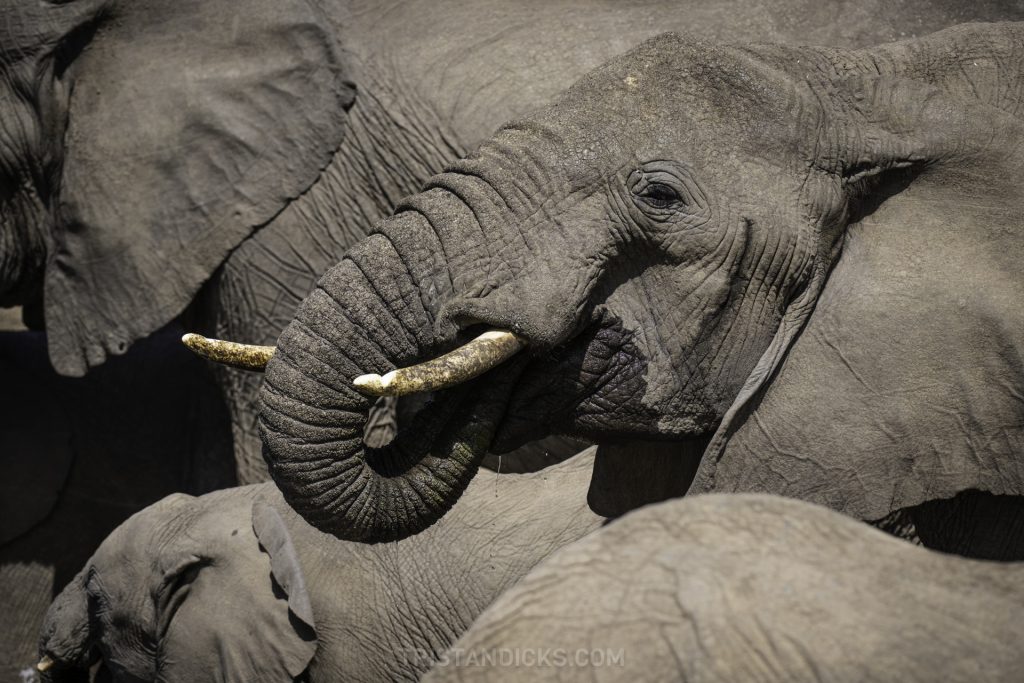
When it comes to calves nursing from their mothers, they do not use the trunk at all. The trunk is usually folded back over the head and they latch directly with the mouth. Each calf will find a way that they prefer to position their trunks. It is thought to take a calf many years to learn how to use the trunk properly, some individuals being faster than others, but it can take anything between 3 and 7 years to master the full usage.
The trunk is also used for feeding as it allows the elephants to reach up into the canopy, or down to grasses on the ground. The vegetation is pulled up or off by the trunk and then passed into the mouth from there. Clumps of dirt or dust will be beaten off before being eaten. Along with throwing water on themselves for cooling, they will also use their trunks trunk to throw mud and dust onto themselves as well. this helps protect the skin against the sun and also keep off biting parasites. They can also use the trunk for certain sounds and to help amplify others.
All in all, this amazingly evolved appendage is what makes this, one of Africa’s favorite giants, what it is. An elephant without a trunk is a very sad animal. Without a trunk they struggle to get by and do everything they need to. Next time you are on safari though, spend a little extra time watching an elephant and how good they are with the trunk.