In previous blogs we have had a look at the incredible senses of birds. They have incredible eyesight, super senses of hearing and specialised ways of enhancing these even more so. Mammals have done the same and come up with their own ways and means of using their senses. In this blog we are going to have a look at the mammal senses and some of the ways they have adapted to use them and why they have done so as well.
As with humans, other mammals respond to their environment by reacting to stimuli that reach the central nervous system. These are taken in by site, scent, touch and taste. Each animal will have senses that are adapted better than others all depending on their habitat and lifestyle. Antelope for example always look like they are on edge. This is because some of their senses are so acute, that they pick up on things that we don’t, a small scent on the wind, or a rustle in the grass. People have believed for centuries that animals have extra senses, but this is simply not the case, with their incredible senses already, they don’t need the extra ones.
Eyesight
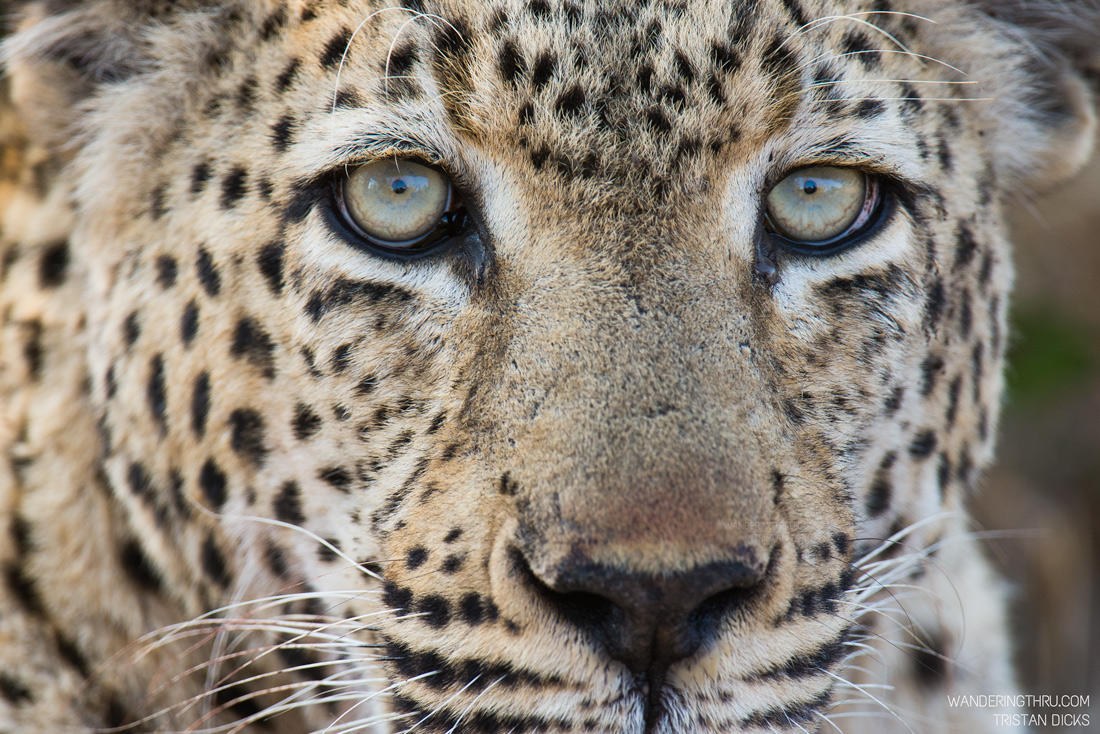
When it comes to humans, we actually rank pretty well when it comes to seeing good detail when there is good light. It is when it starts getting dark that we start falling behind and things like the cats take over. They only need a sixth of the light that we need to see perfectly. Even in good day light, there are animals that can see a lot better than us. A cheetah can spot a herd of impala at almost five kilometres away, while a mongoose can tell the difference between an eagle and a vulture high up in the sky. At the back of nocturnal animals eyes, they have an extra layer of crystals called the tapetum. The tapetum bounces light back through the retinas sensitive cells, increasing the light in the eye and so sight.
Binoculars vision is needed to see something that is far away and to use binocular vision, the object needs to be seen with both eyes. Animals that need depth perception, like monkeys that climbs, or predators that hunt, will have forward facing eyes. This allows for a wider field of binocular vision where the two eyes overlap with their sight. Herbivores on the other hand, have their eyes set on the sides of their heads, giving them a wider field of view. This helps them spot anything that may be trying to sneak up on them. This doesn’t help with binocular vision though and so they only have a small amount right in front of their faces.
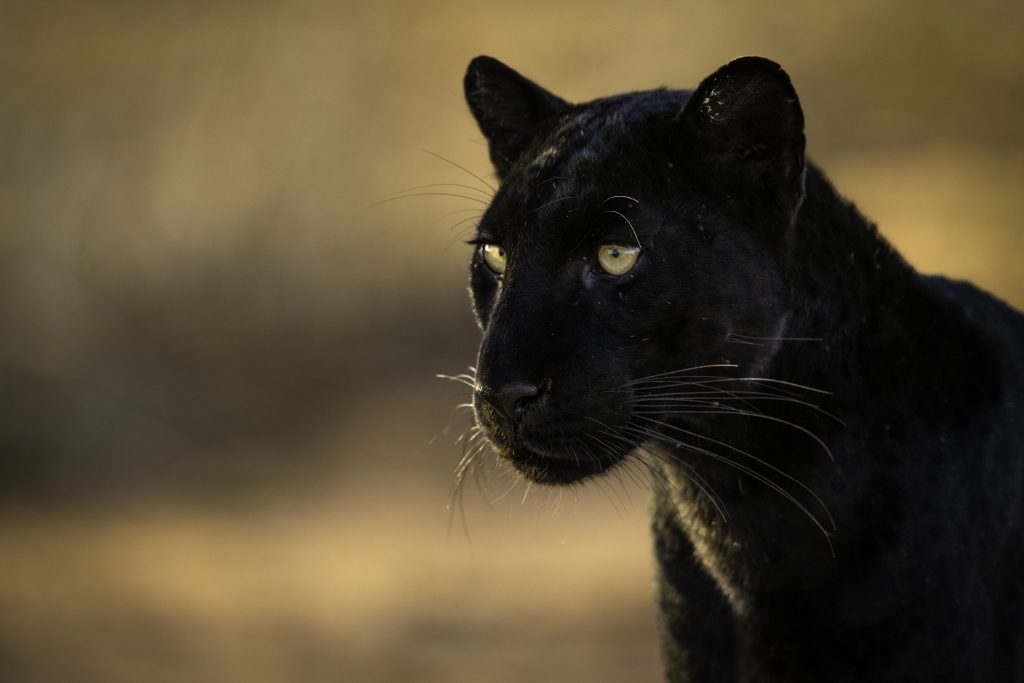
When it comes to seeing colours, most of your diurnal animals will be able to see them, whilst most of your nocturnal animals won’t. Lions and leopards for example have given up their colour vision for nocturnal vision, while it is believed that cheetah can still see colour. Primates like us can see colour, this is so that they can choose the best food and ripest fruits when feeding. Some, like the vervet monkeys, also use colour for dominance displays.
Hearing
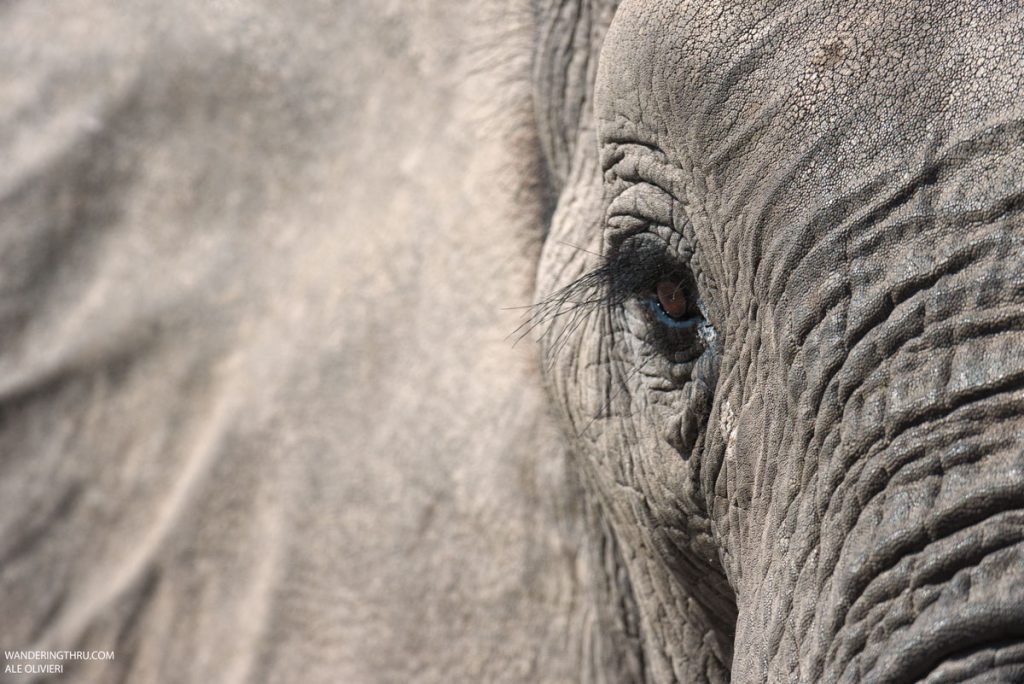
Compared to us, other animals have far better hearing. Most of them are able to move their ears and these act as large external mobile cones that funnel sounds down to the eardrums. When measuring sound, we measure it in hertz, one vibration per second. Certain bats can hear at around 210 000 hertz, while cats and dogs are between 40 000 – 78 000. Rodents are a little higher than this still at around 100 000 hertz. Elephants on the other hand are on the other side of the scale at around 20 hertz, nut in infrasound. To us, this simply sounds like a deep rumble. Remembering that 90% of elephant vocalisation is in lower frequencies that we cannot even hear.
Touch
Even though the larger mammals like hippo, elephant and rhino have an incredibly thick hide, they still feel things. The entire skin of all of the mammals is a sense organ and is sensitive to touch.
On the noses of rodents, insectivores and most of your predators, whiskers are found. The correct name for whiskers are called vibrissae. The roots themselves are where all the nerve sensors are packed. This allows them to be incredibly sensitive and they pick up on anything they brush up against and some can even pick up on low frequency sound.
Taste and smell
If we thought that our hearing and sight were poor as humans, our sense of smell is even worse compared to other mammals. The world of odours is something other mammals live by and we will never quite understand it. for most of the wild mammals, the sense of smell is the most important sense of them all. Some of them can detect odours at concentrations that are mind blowing. One part in a thousand million, which is equivalent to a drop of water in 5 million tons of water. It is thought that some of the mammals can even taste water.
When it comes to the fruit bats, they cannot use sound like their cousins to locate on food, but rather use scent to find ripe fruits and the flowers that they feed on. Things like aardvarks and pangolins will also use their noses to locate on ants and termites, much like other small carnivores and pigs do to find covered food. Scavengers can find and locate on casrrion kilometres away if the wind is right and hyenas can even locate things under water. Once the animal has found the food source, their taste buds will take over and it is these that will tell the mammal if the food is poisonous or not. Browsers will be able to taste tannins released in the plants, this is important as the tannin can destroy the essential bacteria’s they have in their stomachs to help break up food.
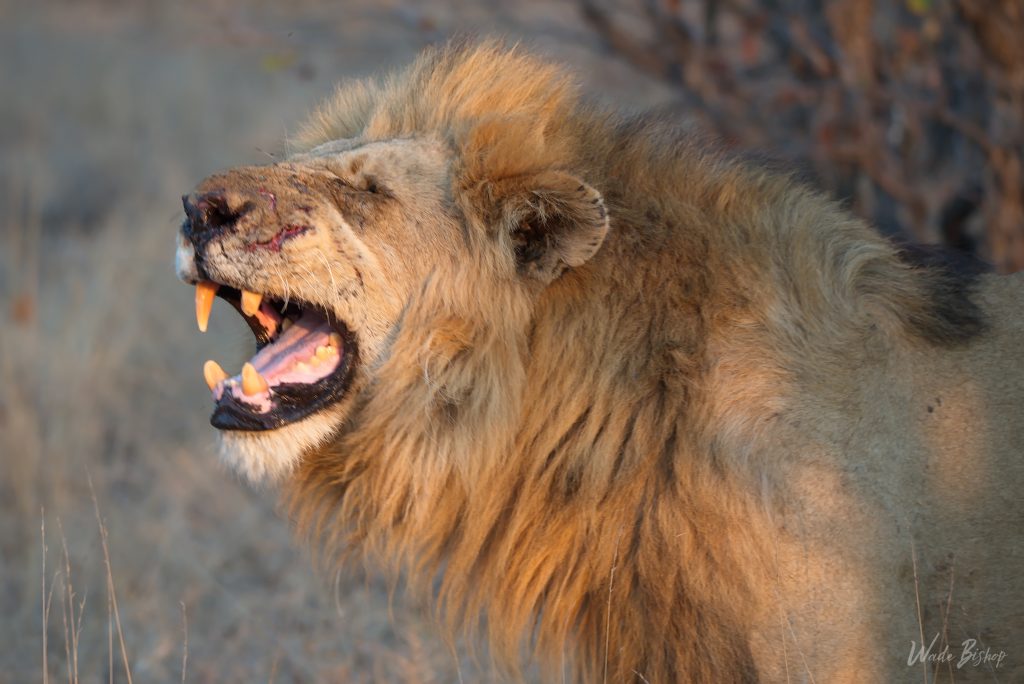
All of the other animals have one more hidden sense that they use, that we no longer use, it is present, but we have evolved away from it. Sitting above the pallet, in the roof of the mouth, lays the Jacobson’s organ. This “organ” responds to both scent and taste that we would not be able to understand. It connects the nose to the mouth and air or liquid are pushed through it. To push the substance through, the mammal has to ‘Flehmen’, which is what we see when animals wrinkle up the nose and curl up the top lip, almost giving the smiling effect. The best time to see this is when males are testing females urine to see if they are ready to breed, or animals on a territorial patrol, taking in another individual’s scent.
Regardless of the sense, there is a mammal out there that will have a greater one than us as humans. Even though we think we are okay with what we have, we are far outmatched and find ourselves close to the bottom of the table if all our senses are averaged out. It just shows how with our brain evolving to the point it is, we have learnt not to rely on our other senses like other mammals.