

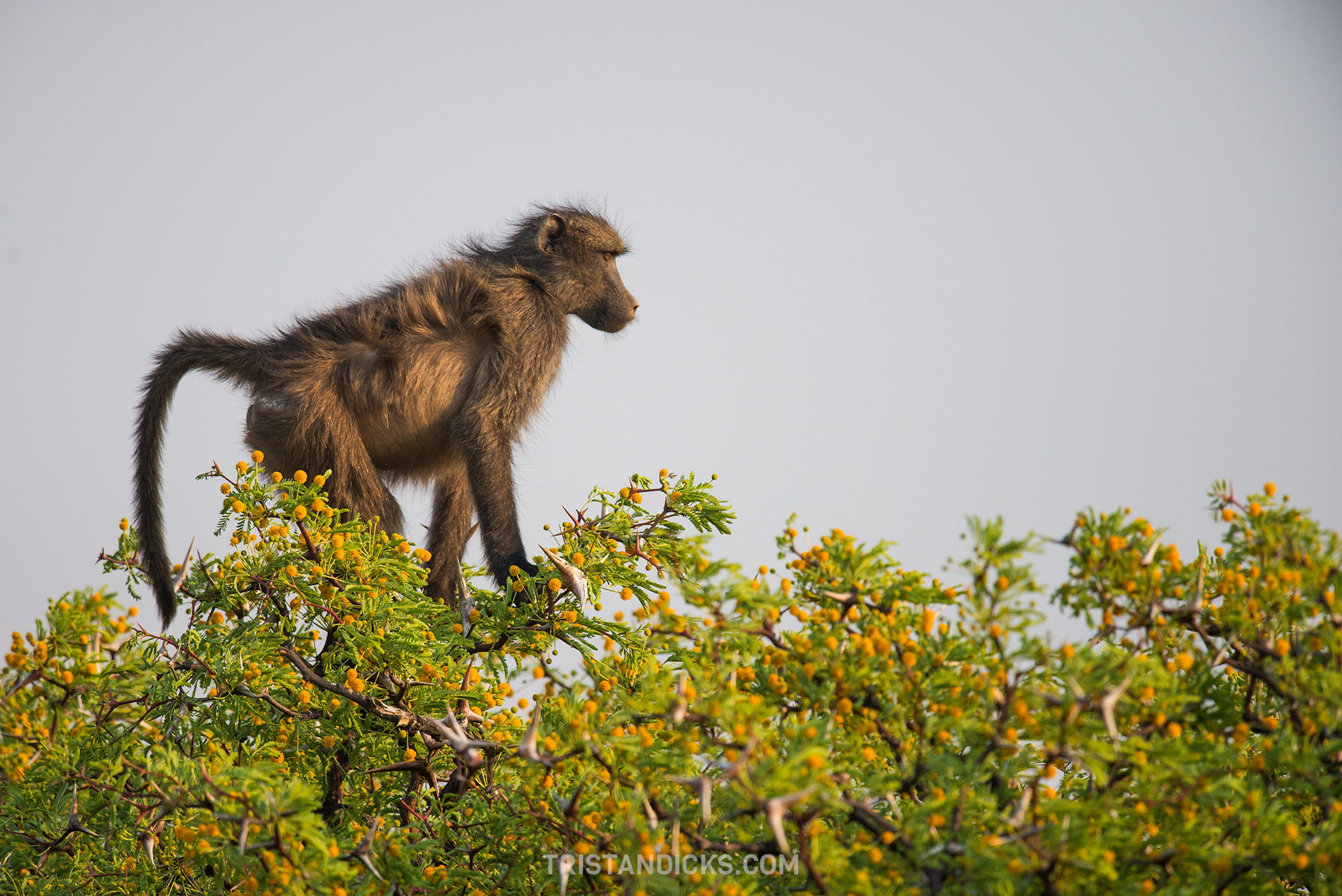
Southern and Eastern Africa are home to a rich diversity of primate species, including both baboons and various types of monkeys. Both of these primates play crucial roles in their ecosystems, from seed dispersal to acting as prey for larger predators, from cats to large birds of prey. Understanding the differences between baboons and monkeys in this region provides insight into their ecological roles, behaviors, and adaptations.
Family ties
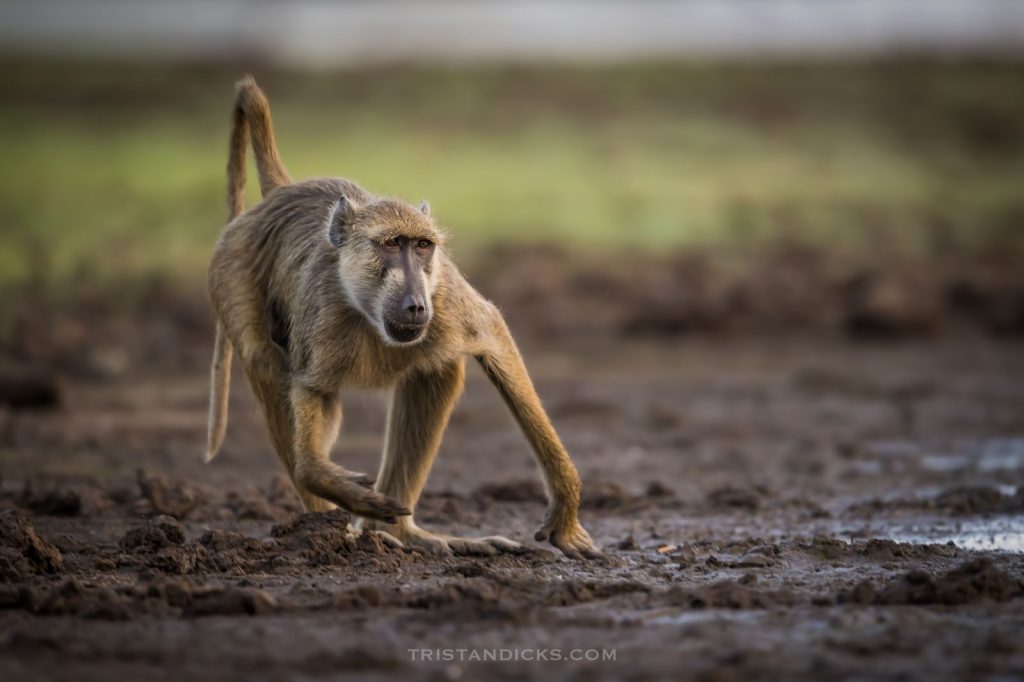
People often ask if baboons are in fact monkeys. They are not and although they are not monkeys, they are primates. We have five species that we find through the two regions, Chacma baboon, Oliver baboon, Yellow baboon, Kinda baboon and the Hamadryas baboon.
When it comes to the monkeys though, we have six species, but split into different families. Mona monkey, Syke’s monkey, Samango monkey and the Vervet monkey are found in one. The Vervet monkey is then most common of not only all the monkeys, but primates of Africa as well. The second family is made up of the beautiful colobus monkeys, with Red, Black-and-White and Angolan the species that are found.
Physical appearance
Baboons are large, robust primates with distinctive physical features. They have elongated faces, large canine teeth, and prominent thickened skin on their buttocks, known as ischial callosities. Baboons also exhibit sexual dimorphism, with males being significantly larger than females. Their fur color varies depending on the species, ranging from olive green to yellowish-brown.
Monkeys on the other hand display a broader range of physical characteristics due to their diverse genera. For example, the Vervet monkey has a characteristic black face with a white border, with a greenish-grey body. Syke’s monkeys are small, slender build and their fur is dark brown or greyish. The Colobus monkeys all have very striking facial features, usually white or black. Their coat color is given away by their names. One thing that most monkeys have that is similar to people, is the flat face.
Social time
Baboons are known for their complex social structures, forming troops that can consist of up to 100 individuals. Troops are typically led by dominant males, and social hierarchy is crucial in maintaining order. Baboons are highly adaptable and can be found in various habitats, including savannas, grasslands, and even forests. Their behavior includes foraging for a diverse diet, engaging in grooming, and utilizing vocalizations to communicate within the troop.

Monkeys also live in diverse social groups, but the way each species works is a little differently to one another. Vervet monkeys live in matrilineal troops, with females remaining in their natal group and males dispersing. They have a well-developed system of vocal communication, with distinct calls for different types of predators. Syke’s monkey form smaller, more fluid groups compared to baboons, with frequent changes in group composition. Their social interactions are characterized by grooming and vocalizations. Red Colobus monkeys are usually found in large groups, often in dense forests. Their diet mainly consists of leaves, and they have a slower metabolism adapted to their folivorous diet. Black-and-white Colobus monkeys are also leaf-eaters and live in smaller, stable groups. They are known for their acrobatic movements and reliance on their prehensile tail for balance.
Where they can be found
Baboons have a broad distribution across Southern and Eastern Africa. They are highly adaptable and occupy a range of habitats, including savannas, open woodlands, and even mountainous regions. Olive baboons in East Africa are known for their adaptability to different environments. Chacma baboons in the south are much the same and can be found in low lying areas along the coastline and also up in the mountains at a high altitude. Baboons at higher altitudes have even evolved longer coats to help combat the lower temperatures.
Monkeys are for more adapt to the different areas species are found in. Vervet monkeys, being the most adaptable are found wherever they can find water and can even been found in semi-arid areas. Monkeys like the Syke’s and Red Colobus are found in the much denser forested areas. Both Red and black-and-white Colobus monkeys enjoy the coastal forests of East AFrica as well, the Samango monkey taking their place in Southern Africa.
Food and how they get it
Baboons are omnivorous and have a varied diet that includes fruits, seeds, insects, small vertebrates, and occasionally even larger prey. Their diet can be influenced by seasonal availability and environmental factors. Baboons are known for their foraging behavior, which can be opportunistic and highly adaptable.
Monkeys again adapt to the areas they live in and so as a group feed on many different things. Vervet monkeys, have the highest diversity of food and will feed on fruits, fresh buds, seeds, insects, eggs and new hatchlings. The Colobus species feed more on plants matter, mainly leaves. To help with this they have specialized stomachs.
Lifespan and their young
Baboons have a gestation period of about 180 days, and females give birth to a single infant, although twins can occur. The infants are highly dependent on their mothers for the first few months of life. Baboons have a lifespan of 20 to 30 years in the wild, with the potential for longer lifespans in captivity.
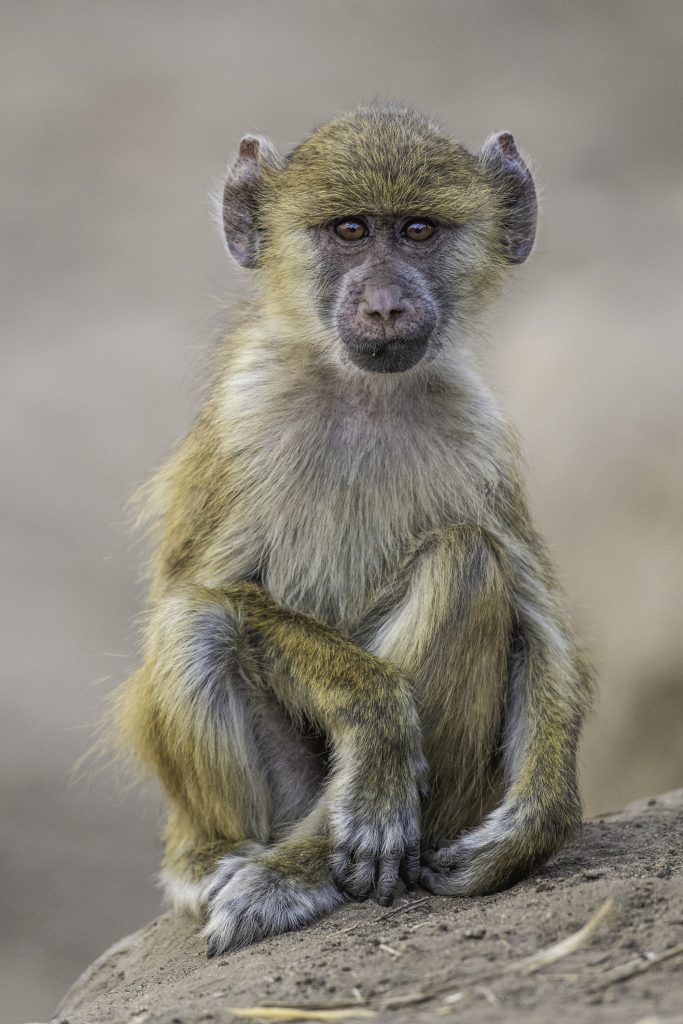
Most of the monkey species have a gestation period between 150 and 165 days. Females will only give birth to a single offspring once a year, although twins are also recorded every now and then. Birthing usually coinciding with the rains so that there is ample food for everyone. Births are synchronized so that young have playmates and young from the previous year will often stay on and act as baby sitters for their new siblings.
Conclusion
Baboons and monkeys in Southern and Eastern Africa exhibit a remarkable diversity in their physical characteristics, behaviors and habitats. Baboons, with their robust build and complex social structures, contrast with the varied adaptations and diets of the region’s monkeys. Understanding these differences highlights the ecological importance of these primates and underscores the need for continued conservation efforts to preserve their habitats and ensure their survival in an increasingly human-dominated world.